

Healthcare has historically operated on a reactive, break-fix paradigm. You feel ill, you visit a clinic, a physician takes a brief snapshot of your vital signs, and a treatment plan is prescribed based on those isolated metrics. This episodic approach relies heavily on retrospective symptom reporting and static data points. If your blood pressure is perfectly normal during a fifteen-minute annual physical but spikes dangerously every evening due to occupational stress, the traditional clinical model will likely miss the hypertension entirely until it causes irreversible cardiovascular damage.
Wearable health technology is fundamentally dismantling this outdated framework. By strapping sophisticated biometric sensors to our wrists, chests, and fingers, we are seamlessly transitioning from reactive medicine to a continuous, data-driven model of preventive care. These devices are no longer glorified step counters; they are clinical-grade sentinels operating in the background of our daily lives, transforming how we understand human physiology and disease prevention.
The Shift from Episodic Snapshots to Longitudinal Data
To understand the profound impact of wearable technology, you must first recognize the value of longitudinal data. There are nearly nine thousand hours in a calendar year. The average adult spends roughly one of those hours in the presence of a primary care physician. The physiological events that occur during the remaining hours have historically been a blind spot to the medical community.
Continuous monitoring eliminates these blind spots. Rather than comparing a patient’s heart rate or blood oxygen level against a broad, generalized population average, wearables establish a highly personalized physiological baseline for every individual user. When you track vital signs continuously over months and years, microscopic deviations from this baseline become glaringly obvious. A resting heart rate that steadily creeps up by five beats per minute over a few weeks, or a sudden drop in deep sleep architecture, provides an early warning system that something inside the body is fundamentally misaligned. This continuous stream of data allows individuals to pivot toward preventive interventions long before severe, acute symptoms force a trip to the emergency room.
The Sensor Technologies Powering the Revolution
The hardware driving this shift toward preventive care has evolved at a staggering pace. Tech manufacturers have successfully miniaturized complex diagnostic equipment, packing an array of advanced sensors into highly durable, consumer-friendly form factors.
Photoplethysmography and Cardiovascular Tracking
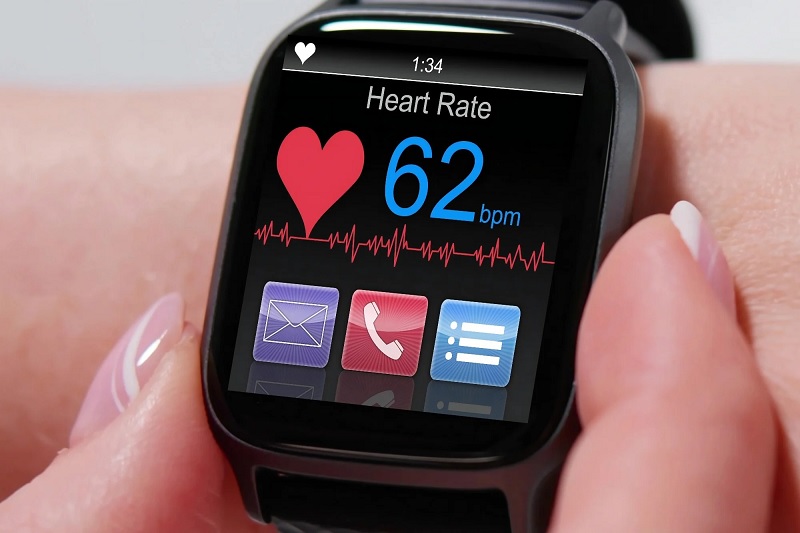
The green lights glowing on the underside of a smartwatch utilize a technology known as Photoplethysmography (PPG). These sensors illuminate the skin and measure the microscopic changes in light absorption caused by the expansion and contraction of capillaries with each heartbeat. This technology accurately tracks resting heart rate, but more importantly, it measures Heart Rate Variability (HRV). HRV is a critical biomarker for preventive care because it quantifies the precise time variance between consecutive heartbeats. A high HRV indicates a resilient autonomic nervous system capable of recovering from stress, while a suddenly plummeting HRV often serves as the very first indicator of impending viral illness, severe systemic fatigue, or overtraining.
Miniaturized Electrocardiograms
Historically, detecting cardiac arrhythmias required a patient to be tethered to a twelve-lead machine in a clinical setting. Today, premium wearables feature built-in, single-lead Electrocardiogram (ECG) capabilities. By completing an electrical circuit across the user’s body, these devices can map the electrical activity of the heart in real-time. This has proven revolutionary for the early detection of Atrial Fibrillation (AFib), a common and often asymptomatic irregular heartbeat that dramatically increases the risk of stroke. Wearables can silently monitor for AFib in the background, prompting the user to seek professional medical evaluation long before a catastrophic neurological event occurs.
Continuous Glucose Monitoring Systems
While smartwatches dominate the wrist, Continuous Glucose Monitors (CGMs) have quietly revolutionized metabolic health. A CGM utilizes a microscopic filament inserted just beneath the skin to measure glucose levels in the interstitial fluid every few minutes. Originally designed strictly for the management of Type 1 diabetes, these devices are rapidly gaining traction in the preventive health sector. Nondiabetic users are leveraging CGMs to map their real-time metabolic responses to specific foods, sleep deprivation, and exercise. By identifying the dietary triggers that cause massive blood sugar spikes and subsequent crashes, users can aggressively mitigate their risk of developing insulin resistance and Type 2 diabetes.
Bridging the Gap Between Consumer Tech and Clinical Workflows
Despite the incredible hardware advancements, the most significant hurdle facing wearable health technology is clinical integration. Generating a massive ocean of biometric data is useless if medical professionals cannot effectively interpret or act upon it.
Physicians are already overburdened; they do not have the bandwidth to review a patient’s raw, minute-by-minute heart rate data spanning six months. When patients dump unorganized wearable data onto a doctor’s desk, it creates friction rather than facilitating care. To solve this, the industry is rapidly developing sophisticated middleware and artificial intelligence algorithms. The goal of clinical AI is to act as a rigorous data filter, silencing the noise and surfacing only the actionable anomalies.
Instead of showing a cardiologist a sprawling graph of daily step counts, an integrated platform will trigger a targeted alert stating that a patient’s nocturnal respiratory rate has increased concurrently with a drop in blood oxygenation, indicating potential sleep apnea. When data is synthesized and presented seamlessly within an Electronic Health Record (EHR) system, physicians can use it to triage patients accurately, titrate medications dynamically, and intervene precisely when a patient’s metrics deviate from their established baseline.
The Privacy Imperative in the Age of Constant Tracking
As the line between consumer electronics and medical devices continues to blur, the collection of continuous health data raises monumental privacy and security concerns. The biometric data captured by a wearable device is the most intimate information a human being can generate. It details exactly when you sleep, your cardiovascular response to stress, your precise location throughout the day, and your underlying metabolic health.
The governance of this data remains a complex gray area. While information transmitted directly to a physician’s EHR is protected by stringent regulations like HIPAA, the data stored on the servers of consumer technology companies often falls outside of these strict medical privacy frameworks. Tech manufacturers frequently anonymize and aggregate this data to sell to third-party research firms, pharmaceutical companies, and advertisers.
For continuous monitoring to reach its full potential within the established medical community, data sovereignty must be prioritized. Users must maintain explicit ownership of their physiological data, with granular control over who accesses it, how long it is stored, and under what circumstances it can be shared with healthcare networks or insurance providers.
The era of relying solely on an annual blood test to dictate personal health is rapidly coming to an end. Wearable health technology has handed consumers the tools to decode their own biology in real time. By continuously tracking our core vital signs and metabolic responses, we are moving away from the expensive, inefficient model of treating advanced diseases and entering an age where proactive wellness, behavioral modification, and early intervention dictate the future of human longevity.
Comments are closed.