

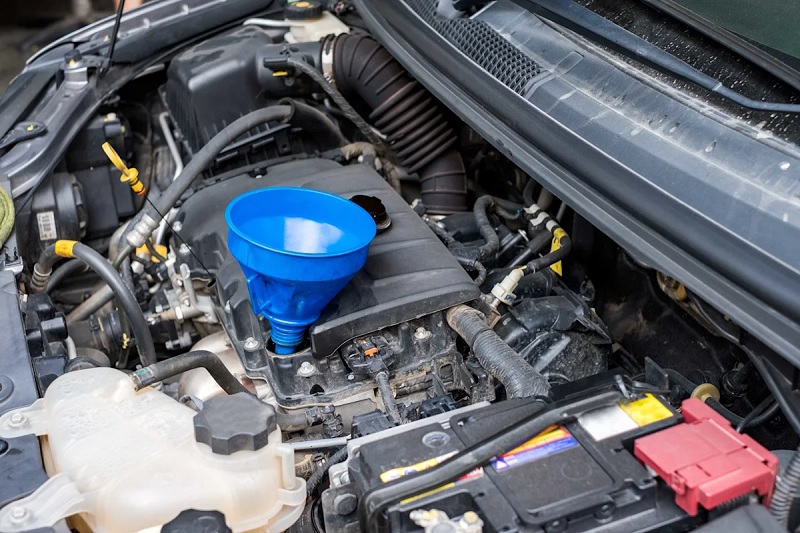
Walk into any local auto parts store, and you will eventually find yourself staring down an entire aisle dedicated to engine oil additives. Brightly colored plastic bottles line the shelves, making bold promises to stop engine leaks, restore lost compression, eliminate knocking, and effectively reverse time on your aging vehicle. For decades, the automotive community has been sharply divided on these products. Some car enthusiasts swear by them as essential life-support for older engines, while automotive purists dismiss them as nothing more than bottled snake oil meant to separate drivers from their hard-earned cash.
As vehicles cross the industry-standard high-mileage threshold of 75,000 miles, internal wear and tear is inevitable. But when you pour a high-mileage additive into your crankcase, what exactly is happening on a chemical level? Stripping away the marketing jargon reveals a fascinating look at the science of tribology—the study of friction, wear, and lubrication. The truth about these additives is not a simple yes or no, but rather a complex interaction of chemistry, engine design, and realistic expectations.
The Physiology of an Aging Engine
To understand how high-mileage additives work, it is crucial to understand what goes wrong as an engine ages. Internal combustion engines are violent, extreme environments. Hundreds of metal components move at thousands of revolutions per minute, subjected to intense heat and immense pressure.
Over years of thermal cycling—heating up to operating temperature and cooling back down—the rubber and silicone seals inside the engine begin to lose their elasticity. They become brittle, shrink, and eventually fail to hold back the oil. This is exactly how you end up with the dreaded rear main seal leak leaving drops of oil on your driveway, or valve guide seals allowing oil to seep into the combustion chamber, resulting in a puff of blue smoke when you start the car.
Simultaneously, the constant friction between the piston rings and the cylinder walls slowly wears away microscopic layers of metal. As the clearances between these moving parts widen, the engine loses its tight mechanical seal. This widening gap allows combustion gases to escape past the pistons—a condition known as blow-by—which robs the engine of horsepower, decreases fuel efficiency, and contaminates the oil faster.
The Chemical Arsenal: What Is Actually in the Bottle?
When you buy a premium high-mileage oil additive, you are not buying a magical elixir. You are purchasing a highly concentrated chemical package designed to address specific symptoms of engine wear. These aftermarket additives generally rely on four primary active ingredients to deliver on their promises.
Seal Swell Agents
The most effective and scientifically proven component in high-mileage additives is the seal swell agent. These are typically synthetic esters that interact chemically with elastomeric materials like nitrile and neoprene used in engine gaskets and seals. When the ester soaks into the hardened rubber, it causes the material to soften and expand slightly. If an engine has a minor weeping leak due to a shrunken seal, seal conditioners can effectively swell the rubber back to its original dimensions, sealing the gap and stopping the leak. This is pure chemistry at work, though it cannot fix a gasket that is physically torn or completely missing.
Viscosity Index Improvers
Many drivers with older cars complain about increased oil consumption and lower oil pressure. Additives address this using Viscosity Index Improvers (VIIs). These are complex polymers that expand as the engine temperature rises. By making the oil slightly thicker at high temperatures, the additive helps bridge the widened clearances between worn engine parts. A thicker oil film provides a better seal around the piston rings, which can temporarily restore lost compression and prevent oil from slipping past the rings into the combustion chamber to be burned.
Aggressive Anti-Wear Compounds
Standard modern motor oils are restricted in how much of certain anti-wear chemicals they can contain, primarily to protect sensitive emissions equipment like catalytic converters. Bottled additives face no such restrictions. They often pack massive doses of Zinc Dialkyldithiophosphate (ZDDP) and Molybdenum Disulfide (Moly). Under extreme heat and pressure, ZDDP undergoes a chemical reaction that deposits a microscopic, glass-like sacrificial film over metal parts like camshaft lobes and lifters. When metal-on-metal contact occurs, this chemical layer wears away instead of the engine’s steel, providing exceptional protection for older, heavily worn engines.
Heavy-Duty Detergents and Dispersants
Older engines are notorious for accumulating sludge—a thick, tar-like substance formed by oxidized oil, unburned fuel, and moisture. High-mileage additives include heavy doses of calcium or magnesium-based detergents to break down this baked-on carbon and sludge. Alongside detergents, chemical dispersants work to keep these microscopic dirt particles suspended in the oil so they can be carried to the oil filter rather than settling in the oil pan.
The Snake Oil Stigma: Where the Skepticism Originates
If the chemistry is real, why do so many professional mechanics view oil additives with intense suspicion? The skepticism is largely directed at the marketing rather than the chemistry itself.
The primary issue is the “mechanic in a bottle” myth. Drivers often misunderstand the limitations of chemical engineering. If an engine has a cracked block, shattered piston rings, or a severely scored cylinder wall, no fluid on earth will repair that mechanical damage. Additives can condition a worn seal, but they cannot replace missing metal. When drivers pour an additive into a severely damaged engine and experience no improvement, they immediately brand the product as snake oil.
The second major concern is chemical clashing. Modern synthetic motor oils are incredibly complex, perfectly balanced fluids crafted by chemical engineers. Every detergent, anti-wear agent, and friction modifier in a high-quality motor oil is designed to work in synergy. When you pour a thick, concentrated aftermarket additive into the crankcase, you risk upsetting that delicate balance. Sometimes, excessive additives can compete for the same metal surfaces, causing them to cancel each other out and actually reduce the oil’s ability to protect the engine.
Formulated High-Mileage Oil vs. Aftermarket Additives
For the average vehicle owner crossing the 75,000-mile mark, a common dilemma is whether to switch to a fully formulated high-mileage motor oil or continue using standard oil while adding an aftermarket treatment.
In most cases, switching to a pre-blended high-mileage motor oil is the safer and more effective route for long-term maintenance. Oil manufacturers formulate their high-mileage oils with the perfect ratio of seal conditioners and extra detergents baked right into the fluid. Because the chemical engineers have balanced the formula in a laboratory, there is no risk of additive clash or over-thickening the oil.
However, aftermarket additives still have a rightful place in the automotive world. They act as heavy-duty triage for specific problems. If you are already running a high-mileage oil but suddenly develop a persistent rear main seal leak, a concentrated bottle of seal-swelling additive might provide the exact chemical boost needed to rejuvenate that specific piece of rubber. Think of high-mileage motor oil as a daily vitamin, while bottled additives function more like a targeted prescription for a specific ailment.
Practical Expectations for Aging Engines
The debate over high-mileage oil additives does not have a single winner because the effectiveness of the product depends entirely on the condition of the engine receiving it.
If you have a well-maintained vehicle that is simply showing the natural signs of aging—perhaps a minor drop of oil on the garage floor, a slight dip in fuel economy, or a faint puff of smoke on cold mornings—a quality additive can provide genuine, scientifically backed relief. The seal conditioners will soften brittle rubber, and the friction modifiers will add a vital layer of protection to worn bearings.
Conversely, if an engine is suffering from severe rod knock, blowing massive clouds of thick white smoke, or leaking oil as fast as you can pour it in, chemical additives will be a waste of money. They are a maintenance tool to prolong engine life, not a magical overhaul in a plastic bottle. Understanding the chemistry behind the claims empowers vehicle owners to make smart maintenance decisions, separating genuine tribology from clever marketing without needing a degree in engineering to keep their cars on the road.
Comments are closed.